A diminished large carnivore guild with contrasting species-habitat associations persists outside national parks in Namibia’s central-eastern landscape
Author links open overlay panelStijn Verschueren ab
, Tim Hofmann ac
, Willem D. Briers-Louw d
, Mikael Kakove ae
, Herwig Leirs b
, Hans Bauer bf
, Laurie Marker a
, Bogdan Cristescu agShow moreShareCite
https://doi.org/10.1016/j.biocon.2024.110741Get rights and content
Highlights
•Large-scale camera trap survey to identify drivers of large carnivore occurrence•Variations in guild composition with species-specific habitat associations•African wild dog, brown hyena, cheetah and leopard variably detected•Functional absence of lions and spotted hyenas despite historical presence•Habitat availability may support carnivore persistence and recolonization.
Abstract
Understanding species distributions is key for effective biodiversity conservation. We conducted a large-scale camera trapping survey in five systematic grids across central-eastern Namibia to identify drivers of large carnivore occupancy and to predict occurrence across a broader mixed-use landscape spanning 161,629 km2. Through targeted searches for intensive-use areas and pooling detections across camera trap stations, we reliably detected the most elusive carnivores. We identified a diminished large carnivore guild with the two top predators (lion (Panthera leo) and spotted hyena (Crocuta crocuta)) functionally absent, although present historically. While brown hyenas (Parahyaena brunnea) were omnipresent, we found local variations in guild composition. African wild dogs (Lycaon pictus) were more common near their resident population eastwards and in areas of greater vegetation productivity. The distribution of cheetahs (Acinonyx jubatus) was determined by the proportional cover of grass, consequently woody encroachment of grasslands may pose a threat. Leopard (Panthera pardus) occurrence was low in areas with a high human footprint, and high in areas with rugged terrain and greater vegetation productivity. The diminished large carnivore guild with contrasting species-habitat associations may enable persistence of subordinate carnivores, such as the cheetah and African wild dog, across this mixed-use landscape. However, we underscore the importance of multi-species conservation approaches to maintain ecological interactions. The large proportion (80 %) of suitable habitat identified, i.e. where probability of occupancy exceeded 0.5, is an encouraging outcome for the region’s potential to hold value for carnivore persistence and potentially recolonization. Considering the limited space for protected area expansion, holistic conservation approaches are warranted to ensure viable large carnivore guilds and functional ecosystems.
Introduction
Biodiversity conservation across large landscapes is key for maintaining ecosystem functionality and services (Mace et al., 2012). Although critical for conservation when management and resources are adequate (Cristescu et al., 2018), protected areas often fall short in effectively covering large extents (Lindsey et al., 2017), emphasizing the need for sustainable land-use practices beyond their borders (Kremen and Merenlender, 2018). Diversifying local livelihoods and effectively operationalizing multifunctional landscapes can provide environmental, social, and economic benefits, thereby leading to improved landscape structure and ecosystem resilience (Wright et al., 2016). Namibia, located in southern Africa and with a very low human population density (Atlas of Namibia Team, 2022), developed an extensive conservation network of national parks and conservancies. The country serves as a prime example of successful community-based conservation efforts and provides a stronghold for various threatened species with a substantial portion of the country’s wildlife numbers residing outside of national parks (Barnes et al., 2004; Lindsey et al., 2013).
Despite Namibia’s conservation successes, costs of living with wildlife remain high (Stoldt et al., 2020). This predicament often results in depleted prey populations and persecution of predators, which is particularly pronounced in the country’s central-eastern communal conservancies (Verschueren et al., 2020). Here, community-benefits from wildlife conservation are typically low, despite the region’s critical position in relation to the southern African conservation network, especially the Kavango-Zambezi Transfrontier Conservation Area (KAZA-TFCA). Understanding wildlife distributions across large spatial scales may be key for identifying conservation priorities, especially when considering the limited resources available and threats associated with future land-use and climatic changes (Bottrill et al., 2008).
Carnivores play vital roles in trophic dynamics and are therefore important conservation research priorities (Cristescu and Boyce, 2013), with their distributions and densities influenced by resource availability, intraguild interactions and anthropogenic activities (Ripple et al., 2014). An intact carnivore guild serves as an indicator of a healthy ecosystem (Dalerum et al., 2008), however the availability of large and continuous tracts of suitable and safe habitat is diminishing due to human expansion and isolation of remaining habitat patches (Newmark, 2008). Under natural conditions, species-specific habitat preferences at different scales enable multiple-species coexistence within a diverse and functional guild (Davis et al., 2018). However, human pressures increasingly narrow niche breadths for many species, which intensifies competitive relations and complicates carnivore conservation efforts (Manlick and Pauli, 2020). Across human-impacted lands, co-occurring species may become increasingly vulnerable to critical habitat thresholds (Swift and Hannon, 2010), possibly leading to local extinctions and diminished carnivore guilds (i.e. where current carnivore richness is lower than historic large carnivore richness due to range contractions) (Wolf and Ripple, 2017).
Large carnivores (i.e. species from the Order Carnivora with body mass > 15 kg, Ripple et al., 2014) are particularly prone to human disturbance since they are wide-ranging and have high energetic requirements. Preventive or retaliatory killings following livestock depredation are among the major threats to their survival, alongside depleted prey populations and habitat loss (Ripple et al., 2014). The southern African large carnivore guild consists of six species (African wild dog (Lycaon pictus), brown hyena (Parahyaena brunnea), cheetah (Acinonyx jubatus), leopard (Panthera pardus), lion (Panthera leo), spotted hyena (Crocuta crocuta)) and has received substantial research attention (Strampelli et al., 2022a). The lion, among the most charismatic and well-studied species, is largely confined to protected areas due to its limited ability to persist in human-dominated landscapes and its reliance on stable prey populations (Bauer et al., 2015). Spotted hyenas are considerably more tolerant to humans, but as a large-bodied and group-living species encounter similar challenges to lions in some areas (Wilkinson et al., 2023). African wild dogs are highly mobile and can persist on smaller prey items, increasing their chances of survival across unprotected lands (Woodroffe et al., 2007). Leopards live solitarily, have broad habitat tolerances and are likely some of the most adaptable large carnivores, provided they are not subjected to intense direct persecution (Jacobson et al., 2016). Cheetahs often live at higher densities outside protected areas because of competitive release from dominant predators (Durant, 1998). However on unprotected lands, cheetahs face challenges with human persecution and woody encroachment of open grassland habitats (Atkinson et al., 2022; Marker et al., 2003). Brown hyenas are perceived to be less conflict-prone and play a critical role as scavenger within southern African systems (Wilkinson et al., 2023).
While prey availability is central in determining carnivore distributions, each species has uniquely adapted to fulfill its ecological requirements, displaying varying degrees of human tolerance and behavioral plasticity (Carter and Linnell, 2016). Current knowledge on large carnivore distributions and their habitat preferences is predominantly derived from research conducted within national parks and in geographically confined areas (Strampelli et al., 2022a). This bias may be attributed to the complex socio-political context of the continent (Bauer et al., 2020), easiness of carrying out research in parks compared to unprotected lands, as well as the challenges related with detecting elusive species (Kelly et al., 2012). Across southern and eastern Africa, carnivore research from rangelands is becoming more common, with most large carnivore species negatively affected by agricultural practices (Kiffner et al., 2015; Schuette et al., 2013). The development of mixed-use landscapes, however, can be conducive to carnivore conservation efforts outside of protected areas (Drouilly et al., 2018; Van der Weyde et al., 2018). Yet, many studies are focused on rather small spatial scales, and some of the widest-ranging species (e.g. African wild dog and cheetah) often remain undetected or at rates too low to be used in a reliable modelling framework (Strampelli et al., 2021). Two recent nationwide efforts integrated carnivore occurrence data from multiple data sources to empirically predict large carnivore distributions across Kenya and Botswana (Broekhuis et al., 2022; Van der Weyde et al., 2022). This responds to the growing need to better understand patterns of large carnivore distributions in understudied and unprotected parts of their range, and across a scale that matches the species’ ranging requirements.
The continuous development of both technological and analytical tools enables researchers to survey larger landscapes more efficiently, and to derive meaningful (i.e. with measures of variance) estimates of carnivore occurrence and their habitat associations on a large scale. In this study, we identified distribution patterns of large carnivores across a large landscape of central-eastern Namibia covering two ecoregions and two biomes. In addition, we identified conservation priority areas based on the predicted probabilities of large carnivore occurrence and quantified the degree of their co-occurrence within these regions. We hypothesized that the distribution patterns and species richness of the large carnivore guild were affected by human pressures. An intact and diverse guild would suggest limited human disturbance and/or availability of abundant resources, while a diminished guild with species-specific habitat associations would be indicative of adaptive responses to cope with these human pressures. Conversely, overall low probabilities of carnivore occurrence within this landscape would suggest functional absence and inability to survive the human impact.
Access through your organization
Check access to the full text by signing in through your organization.
Section snippets
Study area
We conducted the study in the central and northern Kalahari of Namibia, covering the ‘Kalahari xeric savanna’ and ‘Kalahari acacia woodland’ ecoregions (Fig. 1). We focused on the area North of the Trans-Kalahari Corridor highway, covering an extent of 161,629 km2. This region has a semi-arid climate with annual rainfall of 300–400 mm, typically falling from November until April (Atlas of Namibia Team, 2022). The soil is acidic, nutrient poor, and dominated by sand (Wang et al., 2007).
Results
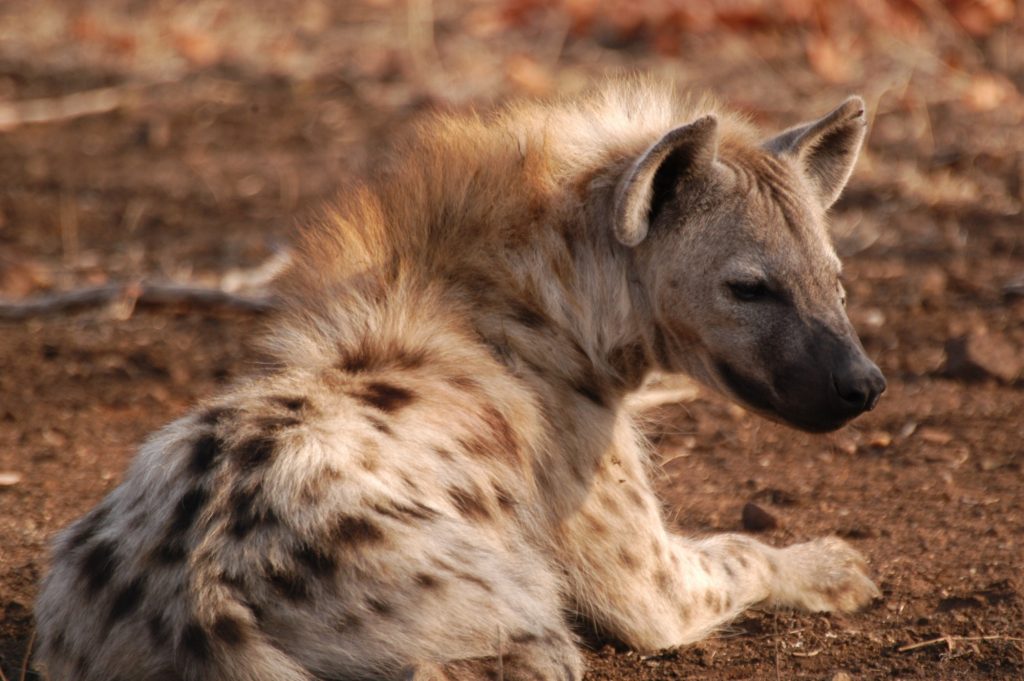
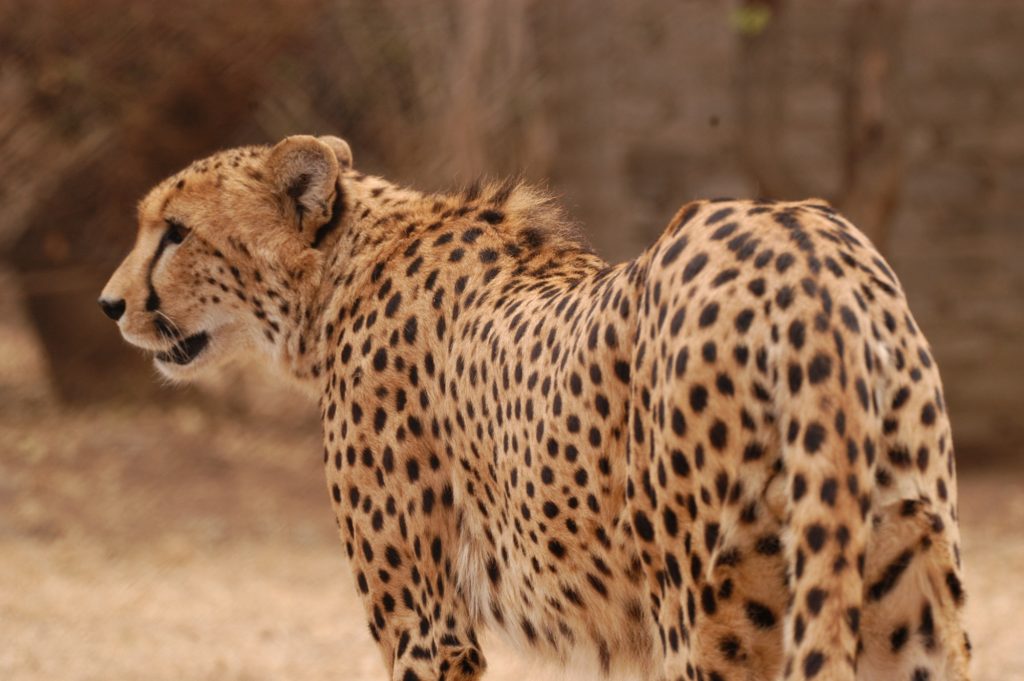
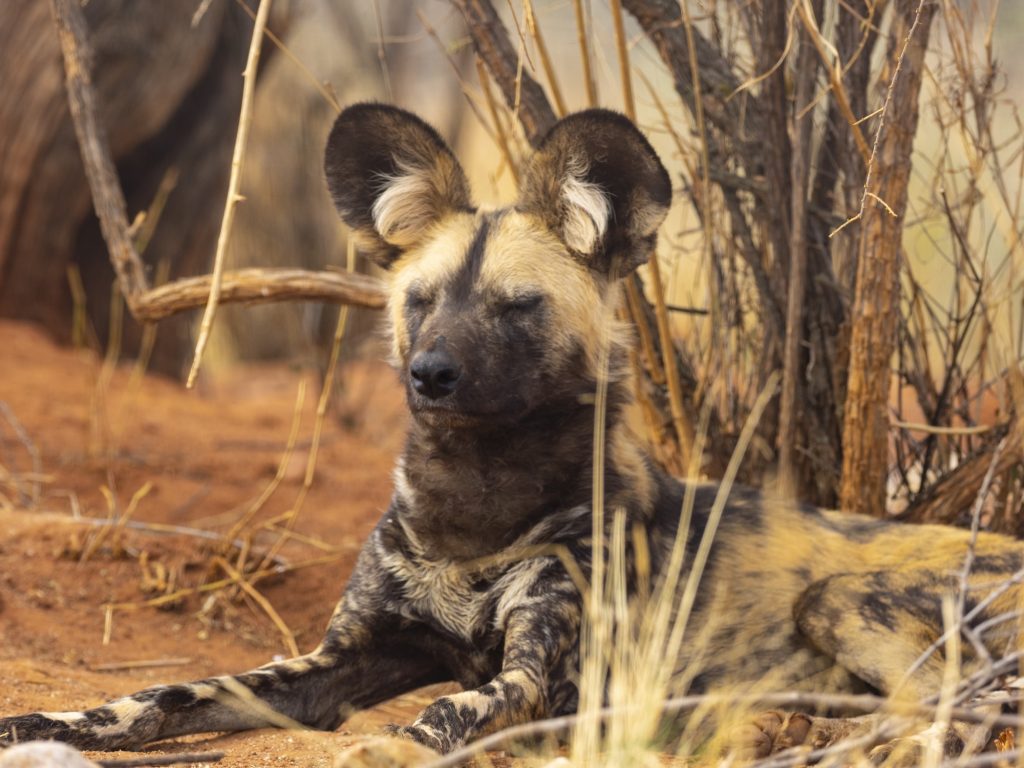
Our camera trapping effort resulted in independent detections of African wild dog (n = 58), brown hyena (n = 1329), cheetah (n = 112), leopard (n = 183), and spotted hyena (n = 6; Supplementary material Table S1). Lions were not detected in any of the surveys. Spotted hyenas had a naïve occupancy of <0.1, while brown hyenas had a naïve occupancy of over 0.9 and were not further examined.
The top-ranked detection models for the three carnivore species with a naïve occupancy between 0.1 and 0.9
Discussion
The study area was characterized by a diminished large carnivore guild, where the contrasting patterns of carnivore distributions suggest that habitat heterogeneity is key for carnivore survival (Davies et al., 2021). This may be particularly true across rangelands, where human activities may restrict resource access and exacerbate competition (Manlick and Pauli, 2020). We identified species of global conservation priority, and the collective importance of species-specific niches within this
Conclusion
National parks rarely match the scale required to support viable large carnivore guilds and there is limited space for future expansion of protected area networks. Facilitating human-carnivore coexistence across unprotected lands is therefore key for carnivore conservation, however their persistence appears limited by varying degrees of human impact and species-specific habitat preferences. As a result, much of our study area was characterized by a diminished large carnivore guild that varied
Funding
The Go Green Fund, initiated by Nedbank Namibia and Namibia Nature Foundation, Indianapolis Zoo Global Conservation Grant, Leopold III-Fonds voor Natuuronderzoek en Natuurbehoud, and the Cheetah Conservation Fund provided funding for this research.
CRediT authorship contribution statement
Stijn Verschueren: Writing – review & editing, Writing – original draft, Visualization, Methodology, Investigation, Funding acquisition, Formal analysis, Conceptualization. Tim Hofmann: Writing – review & editing, Investigation. Willem D. Briers-Louw: Writing – review & editing, Investigation. Mikael Kakove: Writing – review & editing, Investigation. Herwig Leirs:Writing – review & editing, Supervision. Hans Bauer: Writing – review & editing, Supervision. Laurie Marker: Writing – review &
Declaration of competing interest
The authors declare that they have no known competing financial interests or personal relationships that could have appeared to influence the work reported in this paper.
Acknowledgements
We thank the local communities for access to the study area and their assistance during fieldwork.